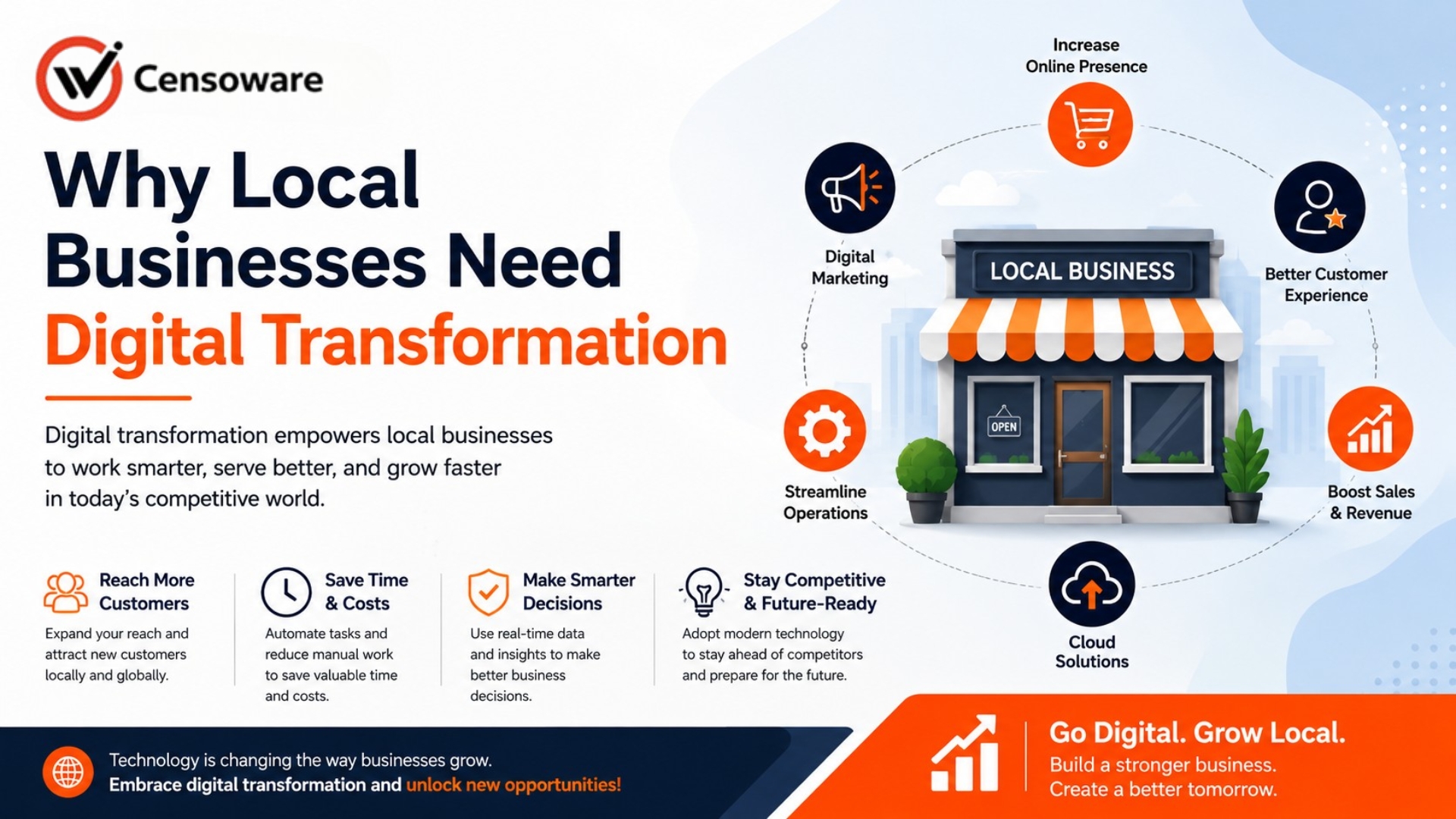
Why Local Businesses Need Digital Transformation
For local business owners who want to protect what they have built and grow beyond it, digital transformation is no longer a choice—it is a requirement.
- Introduction
- What Digital Transformation Means for a Local Business
- Customers Decide Online Before They Visit In Person
- Online Reputation Is the New Word of Mouth
- Digital Tools Create Revenue Opportunities That Physical Locations Cannot
- The Competitive Reality of Not Going Digital
- Frequently Asked Questions
The distance between local businesses that embrace digital transformation and those that delay it grows wider every year. Customers who once depended entirely on proximity and personal referrals now make purchasing decisions through their smartphones browsing options, reading reviews, and comparing businesses before stepping outside. For local business owners who want to protect what they have built and grow beyond it, engaging with this shift is no longer a choice. It is a requirement.
This article examines the specific reasons why digital transformation matters deeply for local businesses, what a meaningful digital business presence looks like in practice, and how businesses that invest in this foundation are consistently outpacing those that have not.
What This Guide Covers
- Why digital transformation is no longer optional for local businesses competing in today's market.
- How a strong digital business presence directly influences customer discovery and buying decisions.
- The practical steps any local business can take to begin their digital transformation today.
- How digital tools open new revenue streams and create a lasting competitive advantage.
What Digital Transformation Means for a Local Business
Digital transformation is the process of using technology to improve how a business operates, how it reaches customers, and how it delivers value. For a local business, this does not require a large budget or a technical team. It means using available digital tools to make the business easier to find, easier to interact with, and more efficient from the inside.
A local clothing store might begin by creating a Google Business profile, enabling card and UPI payments, and posting product updates on Instagram. A service provider might add online booking, start gathering customer reviews, and use a simple digital tool to track appointments and follow-ups. Regardless of the industry, the purpose of digital transformation is the same to connect the business to the customers who are already searching for it online and to serve those customers in ways that build loyalty over time.
Customers Decide Online Before They Visit In Person
The single most important reason for any local business to pursue digital transformation is that customers now make decisions online before they ever arrive at a physical location. They search for businesses, read through reviews, look at photos, check operating hours, and form strong preferences all from a device in their hand. A business that does not appear in these searches, or that appears without sufficient information and reviews to inspire confidence, is effectively removed from consideration before the customer even sets out.
Search behavior tied to local intent has grown substantially. People regularly search for businesses within their immediate area using terms that combine what they need with where they are. The businesses that appear prominently in those results with complete profiles, accurate information, recent activity, and strong customer ratings capture the majority of that traffic. A digital business that has invested in this visibility is present at the exact moment a customer is ready to make a decision.
Online Reputation Is the New Word of Mouth
Local businesses have always grown through reputation. The difference today is that reputation is built and communicated through digital channels at a scale and speed that personal referrals alone cannot match. Online reviews, social media presence, and consistent digital communication are now the primary ways new customers form their first impression of a local business.
A business with a strong collection of positive customer reviews communicates credibility instantly. When a potential customer sees that others have had genuinely good experiences, their decision to visit or make contact becomes far easier. Businesses that actively encourage reviews, respond professionally to customer feedback, and maintain a consistent presence across social media platforms are building a form of trust that compounds over time bringing in new customers continuously through the strength of the reputation they have built online.
Digital Tools Create Revenue Opportunities That Physical Locations Cannot
A physical storefront is bound by geography and operating hours. Digital transformation removes both of those constraints and opens new ways to generate income that the traditional model simply cannot access. A local business with an online ordering option, a social media shop, or a marketplace listing can serve customers who live across the city and convert sales that happen outside of business hours.
Beyond expanded reach, digital tools reduce the cost of operations by automating routine tasks. Appointment reminders, payment confirmations, customer follow-up messages, and promotional communications can all run automatically, freeing up time that would otherwise go to manual administrative work. For a small local business, this efficiency directly translates into better service and the capacity to handle more customers without proportionally increasing staff.
The Competitive Reality of Not Going Digital
Every local market is changing. Businesses that have invested in their digital presence are acquiring customers faster, retaining them longer, and growing their revenue more consistently than those operating without a meaningful online presence. The gap between these two groups is not narrowing it is widening, and it widens further with every passing month that a business delays action.
Amplifying Strengths
Local businesses carry genuine advantages that no national e-commerce platform can replicate personal relationships, deep product knowledge, community connection, and the ability to deliver immediate, in-person service. Digital transformation does not threaten those strengths. It amplifies them by making them discoverable to a far larger audience and by giving the business the tools to communicate those strengths consistently and at scale.
Frequently Asked Questions
Where should a local business begin its digital transformation?
Start with a complete Google Business profile. It is free, directly affects local search visibility, and creates a platform for collecting the reviews that influence customer decisions. Adding consistent social media activity and enabling digital payment options are the natural next steps and together these three actions deliver measurable results quickly.
Is digital transformation affordable for small businesses?
Yes. The core tools Google Business profile, social media accounts, and digital payment integration cost nothing. Paid options including social media advertising and basic website hosting are available at price points designed for small businesses. The growth in customer acquisition and retention that follows typically generates a return within the first few months of implementation.
How much time does maintaining a digital presence require?
Thirty to forty-five minutes per day is sufficient for most local businesses to maintain a meaningful digital presence. Responding to reviews, posting on social media, and monitoring basic performance metrics are habits that, when practiced consistently, build compounding results over time without consuming the entire working day.
How do we measure the results of our digital transformation efforts?
Establish baseline numbers before you begin weekly customer visits, inquiry volumes, average transaction values, and where customers say they heard about the business. Track those same figures after digital tools are in place. Businesses that define their metrics before starting are able to see their progress clearly and make confident decisions about where to invest next.
Final Thoughts
Digital transformation gives local businesses the ability to be found by more customers, trusted more quickly, and chosen more consistently without sacrificing the personal qualities that make them worth choosing in the first place. Building a capable digital business foundation is not about replacing what already works. It is about ensuring that what works is visible, accessible, and growing.
The local businesses that make this investment today are not simply keeping pace with change. They are building a platform for sustained growth that becomes more powerful with every customer relationship deepened, every review earned, and every digital channel strengthened. That platform is available to every local business willing to take the first step.
Censoware helps local businesses navigate their digital transformation journey. Ready to build a stronger digital presence and reach more customers?