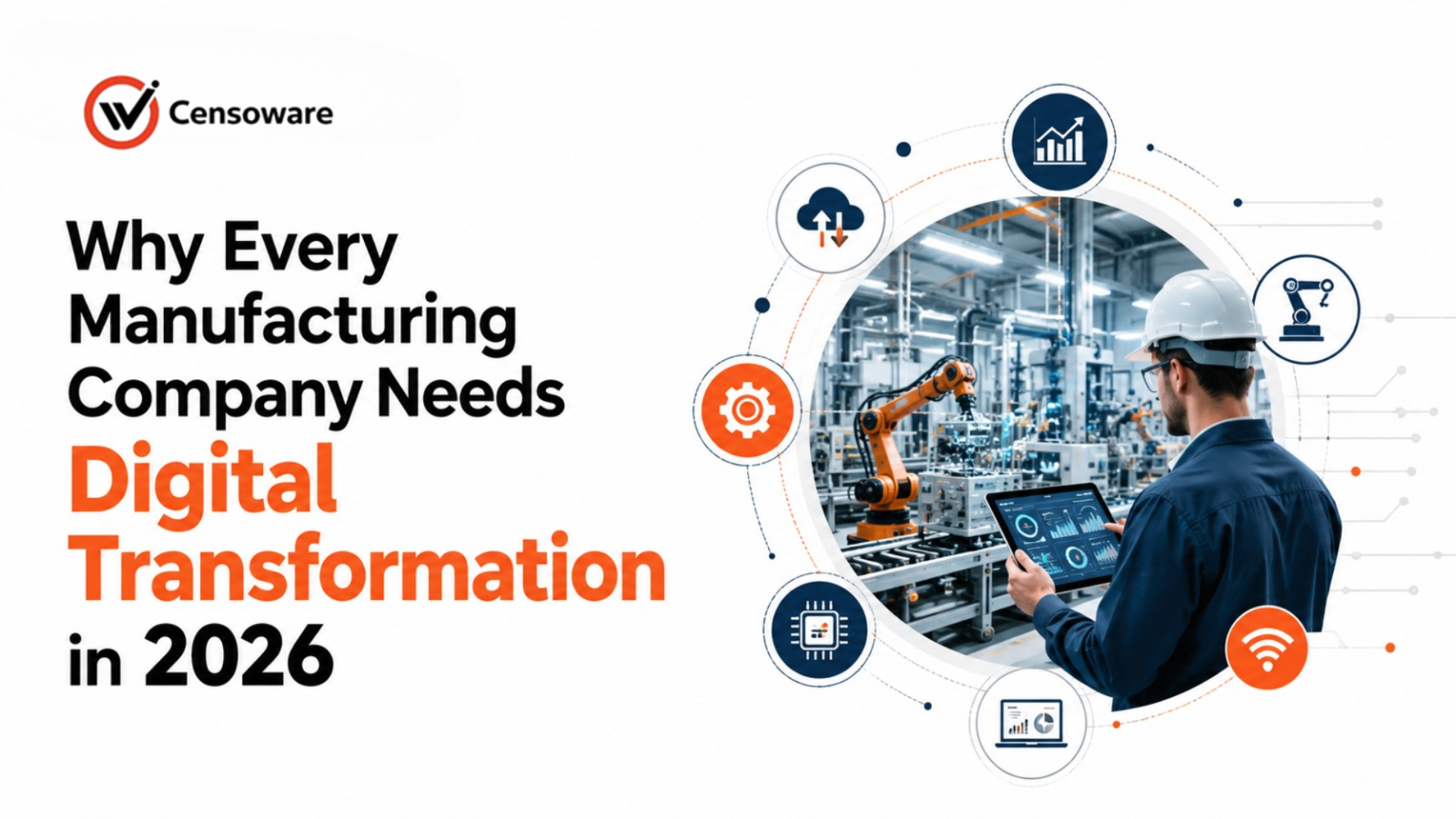
Why Every Manufacturing Company Needs Digital Transformation in 2026
A practical guide to understanding what digital transformation actually means, the forces driving modernization, and how to begin the journey without disrupting production.
- Introduction
- What Digital Transformation Really Means
- Why the Pressure Is Building Now
- The Technologies Powering Smart Factories
- Getting Started Without Disrupting Production
- Frequently Asked Questions
The manufacturing industry has always been defined by machinery, precision, and process. But the factories that thrive today aren't just the ones with the best equipment, they're the ones with the smartest digital infrastructure. Digital transformation, once considered a luxury reserved for large enterprises, has become a survival necessity for manufacturers of every size.
This guide explains why digital transformation is no longer optional, what it actually involves on the shop floor, and how manufacturers that delay this shift risk falling permanently behind competitors who have already made the move.
What This Guide Covers
- What digital transformation actually means for a manufacturing business.
- The forces pushing manufacturers toward modernization right now.
- The core technologies powering smart factories today.
- How to begin the transformation journey without disrupting production.
What Digital Transformation Really Means
Digital transformation in manufacturing isn't simply about installing new software or buying a few sensors. It's a comprehensive rethinking of how a business operates, using technology to connect people, machines, and processes into a single, intelligent system. This includes Industrial Internet of Things devices, cloud-based ERP systems, real-time production monitoring, predictive maintenance, and analytics platforms that turn raw shop-floor data into decisions.
At its core, this shift replaces guesswork with visibility. Instead of relying on end-of-day reports, manufacturers gain real-time insight into every stage of production, from raw material intake to final quality control.
Why the Pressure Is Building Now
Customers now expect the same speed and transparency they get from e-commerce, including real-time order tracking and rapid customization. Supply chains have also proven fragile in recent years, and digitally transformed manufacturers can identify alternative suppliers and reroute logistics quickly, while traditional manufacturers scramble.
Persistent labor shortages are pushing manufacturers toward automation and AI-assisted quality control to reduce dependency on manual processes. On top of all this, manufacturers who have already modernized are consistently outperforming peers on cost, speed, and quality, widening the competitive gap every year others delay.
The Technologies Powering Smart Factories
Modern manufacturing is being reshaped by technologies that give managers and operators real-time data and automation capabilities.
IoT and Predictive Maintenance
IoT sensors placed on machinery collect continuous data on temperature, vibration, and performance, feeding dashboards that let managers spot inefficiencies before they cause downtime. Predictive maintenance uses that same sensor data to forecast failures before they happen, rather than relying on fixed maintenance schedules.
Cloud-Based ERP Systems
Cloud-based ERP systems unify procurement, production, inventory, and finance into one accessible platform, eliminating silos between departments and offering a single source of truth for the entire business.
Digital Twins and Cobots
Digital twins, virtual replicas of a production line, let manufacturers simulate changes and catch bottlenecks before implementing them physically. Collaborative robots, or cobots, work safely alongside human employees on repetitive or hazardous tasks, boosting productivity without eliminating jobs.
Getting Started Without Disrupting Production
Digital transformation doesn't need to happen all at once. Most successful manufacturers start with basic IoT monitoring on critical machinery to gain immediate visibility, then expand into predictive maintenance, and finally into broader ERP integration.
Train Your Team
Employee training matters as much as the technology itself, since resistance from long-tenured staff is one of the most common reasons transformation efforts stall. Preparing the team for new processes ensures adoption rather than friction.
Frequently Asked Questions
1. Is digital transformation only for large manufacturers?
No. Small and mid-sized manufacturers are increasingly adopting scaled-down versions of these technologies, often starting with a single production line before expanding further.
2. What is the first step most manufacturers should take?
Installing IoT sensors on the most critical or failure-prone equipment is usually the fastest way to gain visibility and demonstrate early value.
3. How does digital transformation reduce downtime?
Predictive maintenance uses sensor data to flag equipment issues before they cause a breakdown, allowing repairs to be scheduled proactively instead of reactively.
4. Will new technology require replacing existing machinery?
Not necessarily. Many older machines can be retrofitted with sensors and connectivity solutions rather than being replaced entirely.
5. How long does a typical transformation project take?
Timelines vary by scope, but most manufacturers see it as an ongoing, phased process rather than a single project with a fixed end date.
Final Thoughts
Digital transformation is no longer a forward-thinking bonus for manufacturers, it is a fundamental requirement for staying competitive. The manufacturers embracing connected systems and real-time data are positioning themselves for resilience and stronger margins, while those who delay risk being outpaced by competitors who can can already produce faster and respond quicker to change.
Censoware helps manufacturing companies modernise through tailored digital transformation strategies. Ready to connect your shop floor to a smarter future?
Consult our digital transformation team.