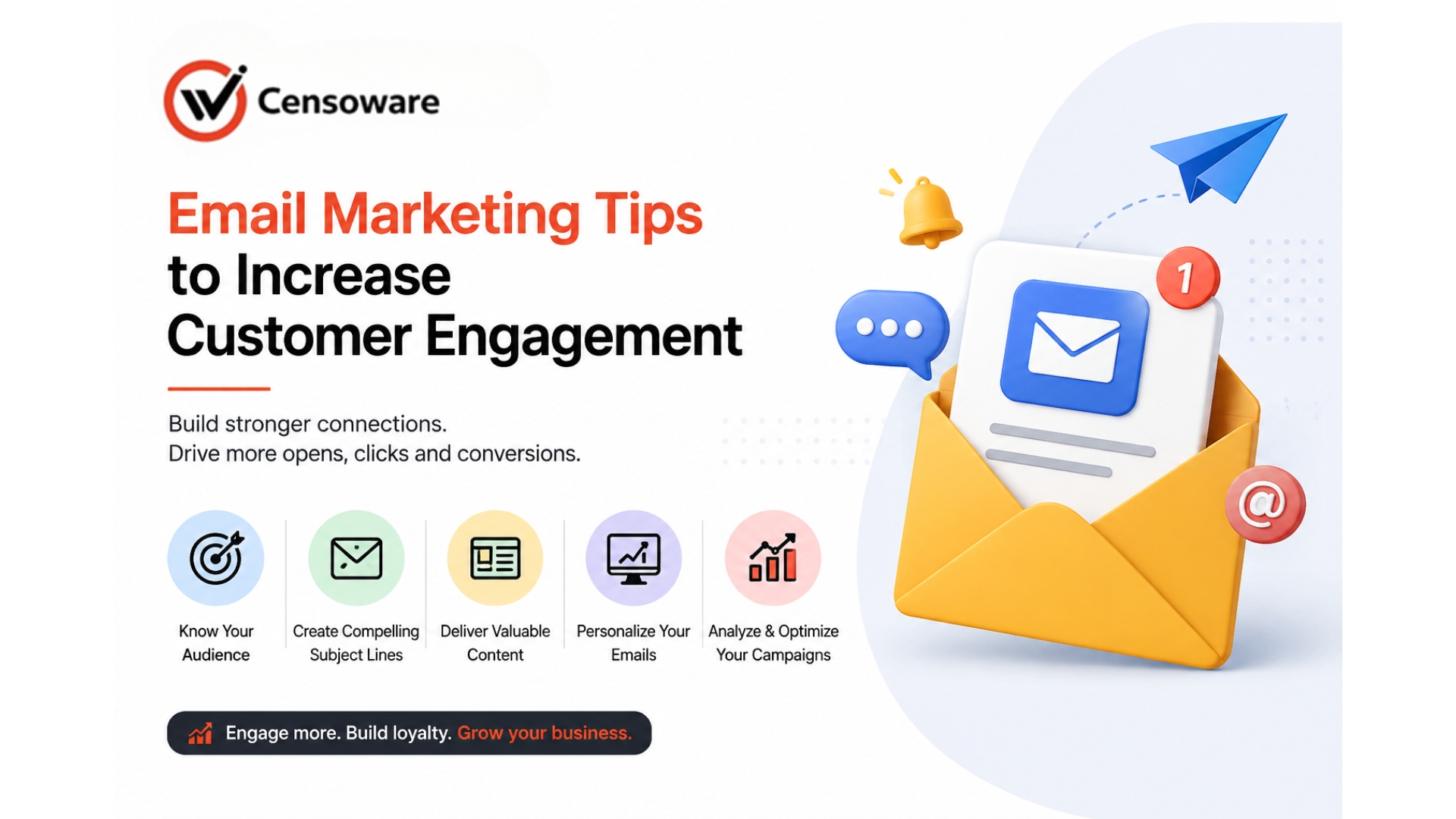
Email Marketing Tips to Increase Customer Engagement
Businesses that master email marketing consistently see higher open rates, clicks, and conversions compared to those relying on sporadic broadcasts. Customers today receive hundreds of emails weekly. They ignore generic blasts but respond to messages that feel personal, timely, and genuinely helpful.
- Introduction
- What Email Marketing Means
- Why Customer Engagement Is the Foundation of Email Success
- How Email Automation Creates Scalable Engagement
- Types of Email Content That Drive Engagement
- How to Build an Email Marketing Plan That Boosts Engagement
- Why Email Marketing Delivers Long-Term ROI
- Frequently Asked Questions
Businesses that master email marketing consistently see higher open rates, clicks, and conversions compared to those relying on sporadic broadcasts. The reason is straightforward. Customers today receive hundreds of emails weekly. They ignore generic blasts but respond to messages that feel personal, timely, and genuinely helpful.
This guide explains how targeted email strategies, especially with automation, increase customer engagement and why email remains one of the highest-ROI channels available to digital marketers.
What Email Marketing Means
Email marketing involves creating and sending targeted messages to nurture leads, retain customers, and drive revenue. Rather than mass blasts, modern email marketing focuses on delivering value through personalized content that matches recipient needs and behaviors.
In practical terms, email marketing includes newsletters, promotional offers, educational series, transactional confirmations, and automated workflows. Each email serves a specific purpose: welcome new subscribers, recover abandoned carts, re-engage inactive users, or celebrate customer milestones.
What separates effective email marketing from spam is relevance. When businesses segment lists, personalize content, and time sends optimally, recipients see value rather than interruption. This approach transforms email from a sales channel into a relationship-building tool that customers actually anticipate.
Why Customer Engagement Is the Foundation of Email Success
Customer engagement measures how actively subscribers interact with your emails through opens, clicks, replies, and conversions. Without engagement, even beautiful designs and compelling offers fail. Disengaged lists lead to poor deliverability, higher spam complaints, and missed revenue.
Engagement builds when customers feel understood and valued. A single well-timed email addressing their specific pain point creates more loyalty than dozens of generic promotions. Engaged customers become repeat buyers, brand advocates, and referral sources driving 5-10x more lifetime value than passive subscribers.
In competitive markets like India, where consumers receive offers from countless brands daily, engagement separates memorable businesses from forgettable ones. Emails that solve problems, share exclusive insights, or acknowledge individual preferences earn attention and trust over time.
How Email Automation Creates Scalable Engagement
Email automation uses triggers and workflows to send relevant messages without manual intervention. When a user abandons their cart, automation sends a reminder. When they make their first purchase, it triggers a thank-you sequence with usage tips.
Automation scales personalization that's impossible manually. Dynamic content pulls in product recommendations based on browsing history. Behavioral triggers ensure perfect timing. Abandoned cart emails sent within 1 hour recover 20-30% of lost sales.
The structure prevents overwhelm. Instead of guessing when to send, automation responds to user actions, creating natural conversation flows. Welcome series, birthday messages, and win-back campaigns all run 24/7, nurturing thousands simultaneously while maintaining a one-to-one feel.
Types of Email Content That Drive Engagement
Not all email content engages equally. The formats that generate the highest interaction demonstrate immediate value and encourage response.
Welcome Series
A three-email sequence introducing the brand story, sharing quick wins, and offering a first-purchase incentive. New subscribers who complete the welcome series show 50% higher engagement long-term.
Educational Newsletters
Weekly tips, industry insights, or how-to guides position your brand as a helpful expert. Content-focused emails generate 2x more clicks than pure promotions.
Behavioral Triggers
Cart abandonment, product views, and wishlists each trigger tailored follow-ups showing exactly what interests the user.
Milestone Celebrations
Birthdays, purchase anniversaries, and loyalty rewards make customers feel recognized as individuals.
Interactive Elements
Polls, quizzes, and emoji reactions turn passive reading into active participation, boosting reply rates significantly.
Case Studies & Testimonials
Social proof emails sharing customer success stories build trust and reduce purchase hesitation.
How to Build an Email Marketing Plan That Boosts Engagement
Effective email plans start with audience understanding. Map customer personas, identify pain points, and document questions they ask at each journey stage.
Step 1: Build Quality Lists
Never buy lists. Use lead magnets (e.g., e-books, checklists), pop-ups, and webinar registrations to grow opt-in subscribers who expect value. Double opt-in confirms genuine interest.
Step 2: Segment Strategically
Divide by demographics (age, location), behavior (opens, clicks), and lifecycle (new, active, lapsed). Segmented campaigns deliver 14x higher opens and 760% more revenue.
Step 3: Create Content Pillars
Define 3-5 core topics aligned with audience needs and business goals. An educational (60%), promotional (20%), and relationship-building (20%) ratio maintains balance.
Step 4: Design Automation Workflows
- Welcome series (3 emails over 7 days)
- Abandoned cart recovery (3 emails over 72 hours)
- Re-engagement (inactive 90+ days)
- Post-purchase nurturing (usage tips, upsell)
Step 5: Optimize Delivery
Test subject lines (under 50 characters), send times (Tues-Thurs, 8-10 AM), and mobile designs. A/B test everything; 20% of the list gets variations, and winners scale.
Step 6: Measure & Iterate
Track opens (20%+ benchmark), clicks (3%+), conversions, revenue per email. Clean lists quarterly, suppress inactives, and analyze drop-offs.
Why Email Marketing Delivers Long-Term ROI
Unlike paid ads that stop working when their budget ends, email assets compound value over time. A single well-performing workflow generates revenue for months. Abandoned cart sequences recover millions annually for e-commerce brands.
Engagement compounds too. Active subscribers expose others through forwards and social shares. Loyal customers cost 5-25x less to retain than acquire. Email becomes a self-sustaining asset, driving predictable revenue regardless of algorithm changes or platform risks.
Frequently Asked Questions
1. What counts as good email engagement metrics?
21%+ open rates, 2.3%+ click rates, under 0.5% unsubscribes, and positive revenue per email represent healthy benchmarks across industries.
2. How does email automation save time while improving results?
Automation handles 80% of routine sends based on triggers, freeing teams for strategy while delivering perfectly timed, relevant messages that double engagement rates.
3. What's the ideal email frequency to maintain engagement?
1-2 emails weekly prevents fatigue while staying top-of-mind. Test per segment: frequent buyers tolerate more than occasional browsers.
4. How do I start email segmentation without technical skills?
Most platforms auto-segment by opens/clicks/purchases. Start simple: new subscribers vs. recent buyers vs. inactive (90+ days).
5. Why do some emails land in spam despite clean lists?
Poor sender reputation, spammy subject lines, too many links/images, or high complaint rates trigger filters. Warm up domains gradually and monitor reputation.
Conclusion
Email marketing with smart automation creates engagement engines that nurture customers predictably at scale. Consistent execution across segmentation, personalization, and workflow optimization transforms subscribers into loyal advocates generating sustainable revenue for years. The brands winning today combine strategic planning with relentless testing, turning email from expense into exponential growth driver.