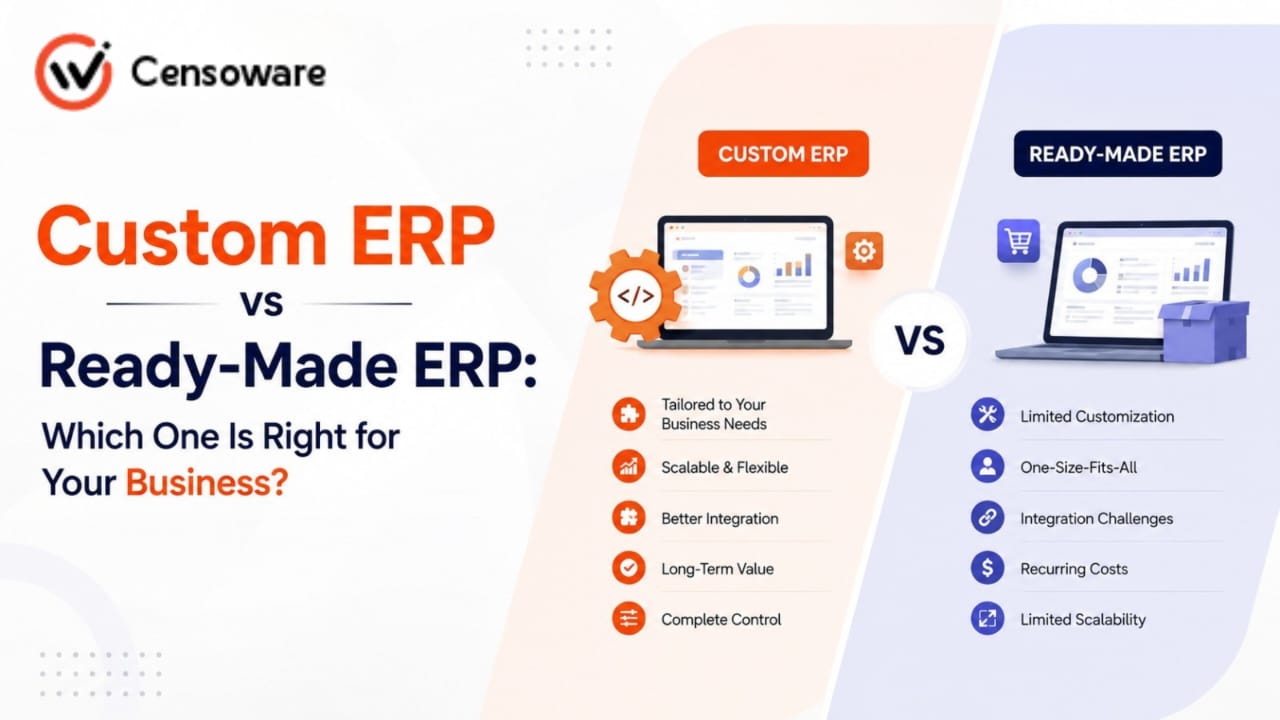
Custom ERP vs Ready-Made ERP: Which One Is Right for Your Business?
Compare custom-built ERP systems with off-the-shelf platforms to determine the right operational fit, cost structure, and scalability for your business.
- Introduction
- What Is an ERP System?
- The Case for Ready-Made ERP Systems
- The Case for Custom ERP Systems
- Key Factors to Consider Before Deciding
- Frequently Asked Questions
Choosing an ERP system is one of the more consequential technology decisions a growing business will make. It affects how finance, inventory, operations, and reporting connect across the entire organization, often for years after the initial decision is made. One of the first major questions businesses face is whether to invest in a custom-built ERP system or adopt a ready-made platform designed for broad use.
This guide breaks down how custom and ready-made ERP systems compare, where each tends to make the most sense, and what businesses should consider before committing to either path.
What This Guide Covers
- The key differences between custom-built and ready-made ERP systems.
- The advantages and limitations of each approach.
- Cost, timeline, and scalability considerations businesses should weigh.
- How to decide which type of ERP fits your specific business.
What Is an ERP System?
Enterprise resource planning, or ERP, software is a centralized system that connects core business functions such as finance, inventory, procurement, human resources, and reporting into a single platform. Instead of managing these functions through separate, disconnected tools, an ERP system allows data to flow automatically between departments, giving businesses a unified, real-time view of their operations.
Ready-made ERP systems are built by software vendors to serve a broad range of businesses across different industries, offering a standard set of features that can often be configured, but not fundamentally changed. Custom ERP systems, by contrast, are built specifically for one business, designed around its exact processes, terminology, and operational structure from the ground up.
The Case for Ready-Made ERP Systems
Ready-made ERP platforms offer several practical advantages, particularly for businesses with relatively standard operational needs. Because these systems are already built, they can typically be implemented faster than a custom solution, allowing a business to start using core functionality within weeks or months rather than waiting for a full custom build.
Cost is another significant factor. Ready-made ERP systems generally involve lower upfront costs, since businesses are paying for a subscription or license rather than funding a custom development project from scratch. This makes ready-made systems more accessible for smaller businesses or those without a large technology budget.
Ready-made platforms also benefit from ongoing updates, established support systems, and a broad user base that has already tested and refined the software over time. For businesses whose operations closely match standard industry workflows, this maturity and stability can outweigh the limitations of a less customized fit.
The Case for Custom ERP Systems
Custom ERP systems offer a different set of advantages, particularly for businesses with workflows, compliance requirements, or scale that do not fit neatly into standard ERP categories. Because the system is built specifically around the business, it can reflect exactly how that business operates, rather than requiring the business to adjust its processes to match the software.
This precision often leads to fewer workarounds and less duplicated effort over time, since the system does not include unnecessary features or force employees into steps that do not match how the business actually works. Custom ERP systems can also scale more precisely alongside the business, since new functionality can be added specifically when and how the business needs it.
The tradeoff is cost and timeline. Custom ERP systems typically require a larger upfront investment and a longer implementation period than ready-made platforms, since the software must be designed, built, and tested from the ground up rather than configured from an existing product.
Key Factors to Consider Before Deciding
The right choice between custom and ready-made ERP depends heavily on how closely a business's operations match standard industry workflows. Businesses with fairly typical processes in finance, inventory, or operations often find that ready-made systems, once properly configured, meet their needs effectively without the added cost of a custom build.
Businesses with highly specific workflows, regulatory requirements, or operational structures that do not map cleanly onto generic categories tend to benefit more from a custom approach, even accounting for the higher initial investment. Long-term growth plans also matter. A business expecting significant, complex growth may find that a custom system scales more smoothly than a ready-made platform that eventually reaches its configuration limits.
Budget and timeline constraints are equally important. Businesses that need a functioning system quickly, or that have limited upfront budget, often start with a ready-made ERP and revisit the custom option later once operations and requirements are better understood.
Frequently Asked Questions
1. Can a business switch from a ready-made ERP to a custom one later?
Yes. Many businesses start with a ready-made ERP and transition to a custom system once their operations have grown complex enough to justify the investment.
2. Is custom ERP always better than ready-made ERP?
No. The right choice depends on how closely a business's workflows match standard processes. Ready-made systems are often the more practical choice for straightforward operations.
3. How much more expensive is a custom ERP system?
Costs vary widely depending on scope and complexity, but custom ERP systems generally involve a significantly higher upfront investment than subscription-based ready-made platforms.
4. How long does a custom ERP implementation typically take?
Timelines depend on complexity, but custom ERP projects generally take longer than ready-made implementations, since the system is built from the ground up.
5. What is the biggest risk of choosing the wrong ERP type?
Choosing a system that does not match how the business actually operates often leads to workarounds, inefficiency, and eventually the need to replace or rebuild the system later.
Final Thoughts
There is no universally correct answer between custom and ready-made ERP. The right decision depends on how closely a business's operations align with standard industry workflows, how much budget and time are available, and how the business expects to grow over the coming years.
Businesses that take the time to honestly assess their own operational complexity before choosing tend to make better long-term ERP decisions, avoiding the cost and disruption of switching systems after the fact.
Censoware builds custom ERP solutions engineered specifically around your unique business operations. Considering a custom ERP implementation?