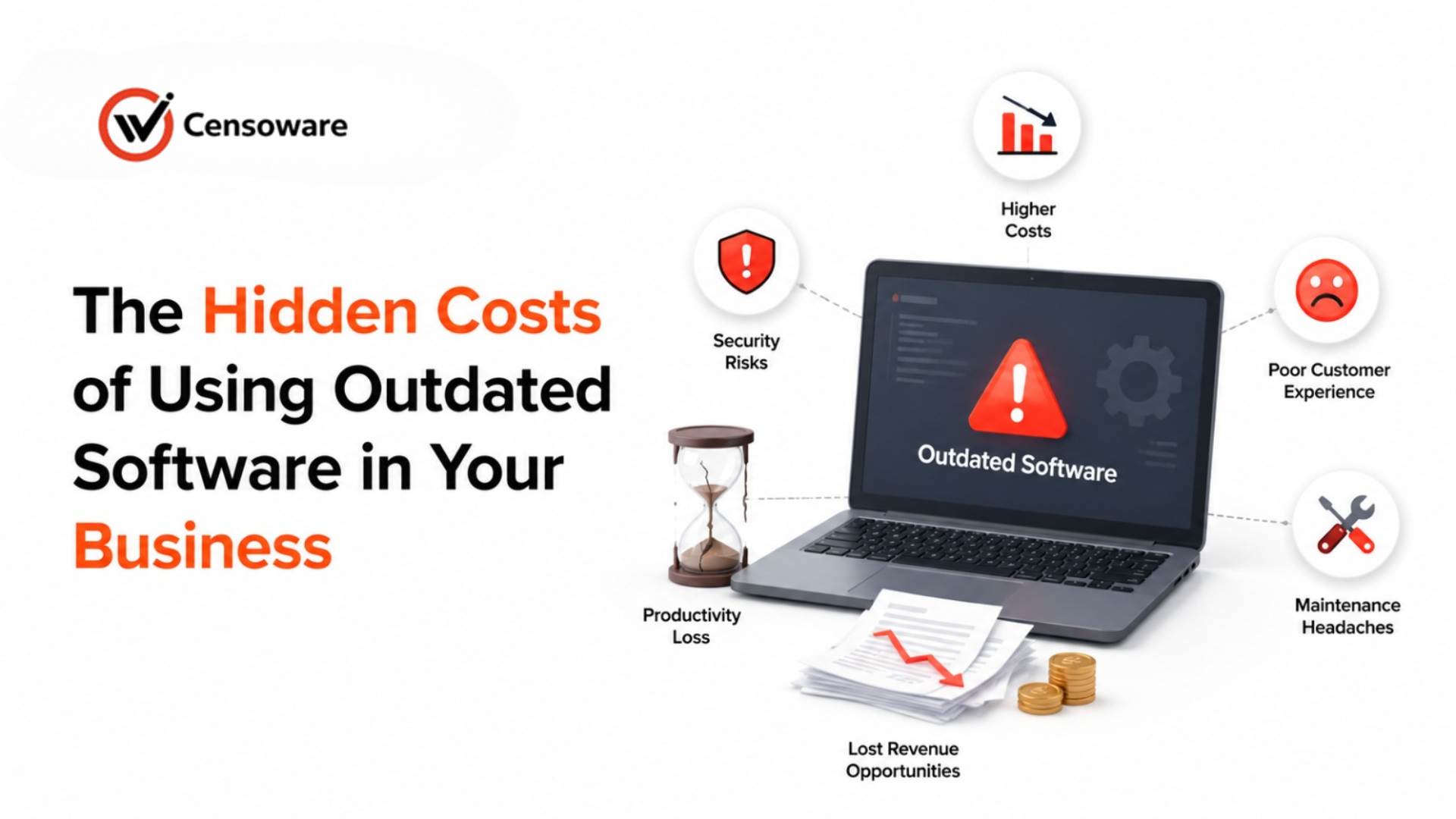
The Hidden Costs of Using Outdated Software in Your Business
A guide to understanding how legacy software quietly drains productivity, increases risks, and why modernizing is often the more economical choice.
- Introduction
- Productivity Losses That Add Up
- Security and Compliance Risks
- Rising IT Costs and Missed Opportunities
- Calculating the True Cost
- Frequently Asked Questions
Every business owner is familiar with visible costs, rent, salaries, and marketing budgets. But there's a category of expense that rarely appears on any balance sheet, quietly draining resources month after month: the hidden costs of outdated software. Many organizations keep running legacy systems simply because "it still works," without realizing how much that technology is costing them.
This guide breaks down the real, often invisible costs of clinging to old software and why upgrading, though it requires upfront investment, is almost always the more economical choice over time.
What This Guide Covers
- The invisible ways outdated software drains productivity and revenue.
- The security and compliance risks tied to unsupported systems.
- How legacy software quietly increases IT and staffing costs.
- How to calculate the true cost of staying with old systems.
Productivity Losses That Add Up
Outdated software often lacks automation that modern systems offer as standard, forcing employees to manually transfer data between disconnected systems or duplicate entries. These small inefficiencies, repeated daily across a workforce, translate into significant productivity losses over a year.
Legacy systems are also more prone to crashes as they age, and every minute of downtime translates directly into lost work and frustrated customers. New employees often need longer training periods to learn clunky, unintuve interfaces, slowing down onboarding as well.
Security and Compliance Risks
Software vendors regularly release patches for newly discovered vulnerabilities, but older systems, especially those no longer actively supported, stop receiving these updates, leaving businesses exposed.
Financial and Legal Fallout
The financial fallout from a breach includes direct recovery costs, regulatory fines, and long-term reputational damage as customers lose trust and take their business elsewhere. In regulated industries, outdated software may also fail to support current compliance requirements, adding legal exposure on top of operational risk.
Rising IT Costs and Missed Opportunities
Ironically, many businesses avoid upgrading because they fear the cost, yet end up spending significant amounts maintaining outdated systems instead. Finding IT professionals skilled in maintaining aging legacy software becomes harder and more expensive over time.
Outdated systems also struggle to integrate with newer tools, creating data silos that fragment decision-making, and they often lack the analytics capabilities competitors are using to spot trends and forecast demand more accurately, putting laggards at a real disadvantage.
Calculating the True Cost
When evaluating whether to upgrade, businesses often focus narrowly on the upfront cost of new systems without accounting for the ongoing hidden costs of staying put.
The Honest Comparison
A fair comparison should include lost productivity hours, breach exposure, integration limitations, missed revenue, rising maintenance costs, and employee turnover linked to frustration with old tools. Calculated honestly, the multi-year cost of standing still usually exceeds the cost of modernizing.
Frequently Asked Questions
1. How do I know if our software is actually "outdated"?
Warning signs include the vendor no longer releasing security patches, frequent crashes, difficulty integrating with newer tools, and employees relying on manual workarounds.
2. Is upgrading always worth the disruption?
Usually, yes, when the upgrade is planned in phases. A sudden full overhaul is riskier than a prioritized rollout starting with the most critical pain points.
3. What's the biggest hidden cost businesses underestimate?
Security risk is typically the most underestimated, since the cost of a breach rarely shows up until after it happens, by which point it is far more expensive than prevention.
4. Can outdated software really affect employee retention?
Yes. Employees who fight against slow, clunky tools daily report lower job satisfaction, which contributes to higher turnover and the costs that come with it.
5. How should we prioritize what to upgrade first?
Start with systems tied to security exposure or the most frequent employee complaints, since these typically offer the fastest, most visible return.
Final Thoughts
The costs of outdated software extend far beyond what appears on a financial statement. Lost productivity, security vulnerabilities, missed opportunities, and employee frustration combine to create a substantial, often invisible, drain on performance.
Businesses that recognize this and modernize proactively position themselves for greater efficiency and stronger competitiveness.
Censoware helps businesses modernize out-of-date legacy systems. Ready to reduce hidden costs and build a streamlined digital infrastructure?
Consult our modernizations team.